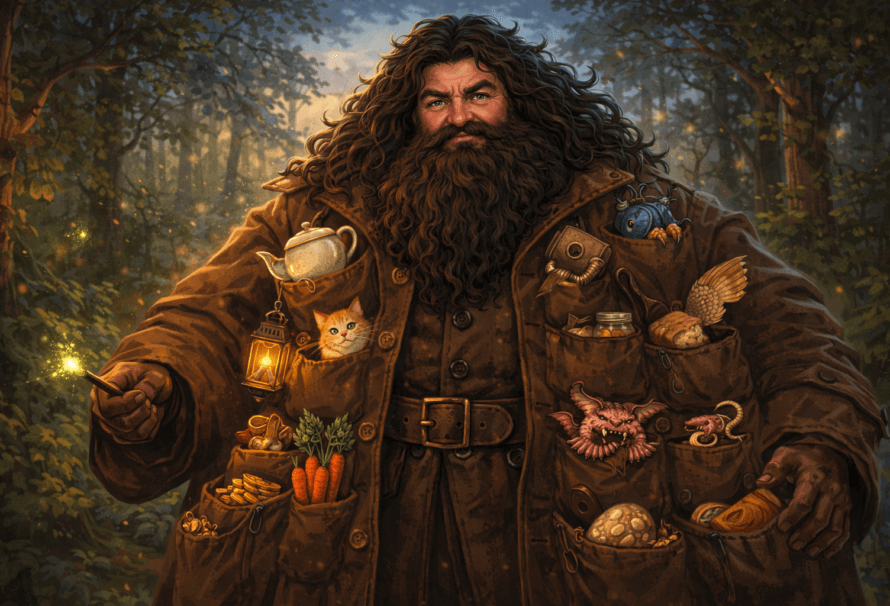
Rubeus Hagrid serves as the emotional gateway into the Wizarding World. Long before Harry understands prophecy, politics, or dark magic, it is Hagrid who introduces him to belonging. In the upcoming Harry Potter, the character receives a new long form interpretation designed to restore the warmth, vulnerability, and quiet strength that define him in the novels.
Often remembered for his imposing size and affection for magical creatures, Hagrid’s role extends beyond comic relief or visual spectacle. He represents loyalty, acceptance, and moral clarity in a world often divided by blood status and ambition.
This page will serve as the ongoing profile of Rubeus Hagrid in the HBO adaptation and will be updated as the series progresses.
Who Plays Rubeus Hagrid in the HBO Series
Rubeus Hagrid in the HBO series is portrayed by Nick Frost. His casting introduces a new interpretation of one of the most beloved figures in the Wizarding World.
The Rubeus Hagrid HBO actor must balance physical presence with emotional gentleness. Hagrid is half giant, physically imposing and capable of great strength, yet emotionally open and easily moved. His loyalty to Dumbledore and instinctive kindness toward Harry define his character more than any magical ability.
The television format offers extended space for Frost to develop Hagrid beyond his introduction scenes. Rather than appearing primarily at major plot points, Hagrid’s presence can be woven more consistently into the daily life of Hogwarts.
Hagrid’s Character Arc in the Books
In the novels written by J. K. Rowling, Hagrid first appears as the figure who delivers Harry from the Dursleys into the Wizarding World. From that moment forward, he functions as protector, confidant, and guide.
Key aspects of his character arc include:
- His expulsion from Hogwarts and wrongful suspicion
- His unwavering loyalty to Dumbledore
- His passion for magical creatures
- His vulnerability regarding public perception
- His eventual role as Care of Magical Creatures professor
Hagrid’s backstory reveals a life shaped by prejudice. As a half giant, he faces distrust from parts of the wizarding community. This marginalization informs his empathy toward outsiders, including Harry, who grows up feeling excluded.
The novels portray Hagrid not as flawless, but as deeply human. His impulsiveness occasionally causes complications, yet his intentions remain rooted in protection and affection.
How the HBO Series Can Expand Hagrid’s Role
The serialized structure of the HBO adaptation provides meaningful opportunities to deepen Hagrid’s characterization.
One area for expansion is his relationship with magical creatures. The books contain rich descriptions of his fascination with dragons, hippogriffs, and other misunderstood beings. A television series can dedicate time to exploring this passion in detail rather than limiting it to brief scenes.
His emotional vulnerability can also be portrayed more gradually. Hagrid’s embarrassment when questioned about his background, his anxiety over being judged, and his quiet pride in teaching can all benefit from extended screen time.
Additionally, the HBO series may further develop his connection with Dumbledore. Their bond is rooted in trust forged over years of shared history. Flashbacks or extended dialogue scenes could provide insight into that relationship.
The Hagrid TV reboot portrayal can emphasize that his strength lies not in magical prowess, but in moral steadiness.
Differences from the Original Film Portrayal
The cinematic interpretation by Robbie Coltrane became deeply associated with Hagrid’s identity. Coltrane’s performance highlighted warmth, humor, and physical presence, leaving a lasting impression on audiences.
However, the films condensed several elements of Hagrid’s arc. His struggles with public perception, the emotional consequences of Rita Skeeter’s exposure of his heritage, and his growth as a professor received limited attention.
The Harry Potter HBO cast Hagrid portrayal may restore these layers by dedicating more narrative time to his personal experiences. Television pacing allows the character’s insecurity and resilience to emerge gradually rather than serving as isolated plot devices.
Rather than redefining Hagrid, the series has the opportunity to present a more comprehensive version aligned with the novels.
Hagrid’s Thematic Importance in the Story
Hagrid represents acceptance in a world shaped by hierarchy. He welcomes Harry without expectation, introduces him to friendship, and models loyalty through action rather than status.
Several themes are reinforced through his character:
- Prejudice and social exclusion
- Compassion toward misunderstood beings
- Loyalty beyond institutional authority
- The importance of chosen family
Hagrid’s half giant heritage also parallels broader themes of discrimination present throughout the Wizarding World. His character challenges assumptions about power, worth, and belonging.
In a contemporary television landscape, these themes resonate strongly. The HBO adaptation has the opportunity to emphasize their relevance without altering the core narrative.
What to Expect When the Series Premieres
As production continues at Warner Bros. Studios Leavesden, viewers will likely focus on how Hagrid’s introduction is handled in early episodes.
Key elements to observe include:
- The tone of his first meeting with Harry
- His physical design and visual presence
- Chemistry with the young cast
- Portrayal of magical creatures
- Emotional authenticity during moments of vulnerability
Because the HBO series unfolds over multiple seasons, Hagrid’s evolution from groundskeeper to professor can feel gradual and consistent rather than episodic.
This page will be updated with performance analysis, creature design breakdowns, and episode specific insights once the series begins airing.