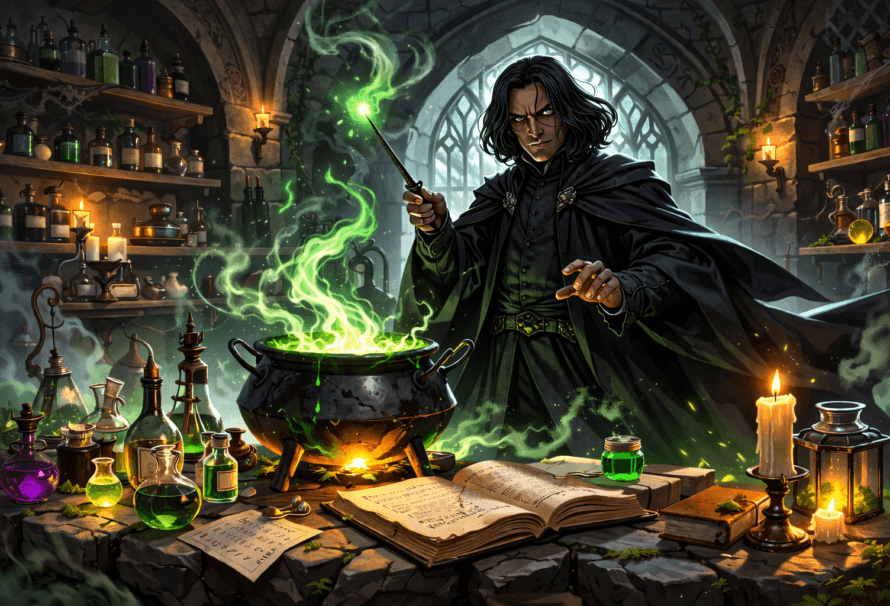
Severus Snape remains one of the most morally complex and emotionally debated figures in the Wizarding World. In the upcoming Harry Potter, the character receives a new long form interpretation that may explore his motivations and contradictions with greater depth than ever before.
Snape is not simply a stern professor or hidden ally. He is a character defined by resentment, sacrifice, obsession, loyalty, and regret. The serialized structure of the HBO adaptation provides space to unfold these layers gradually across multiple seasons rather than revealing them primarily at the narrative’s conclusion.
This page will serve as the ongoing profile of Severus Snape in the HBO series and will be updated as new episodes and performance details emerge.
Who Plays Severus Snape in the HBO Series
Severus Snape in the HBO series is portrayed by Paapa Essiedu. His casting introduces a fresh interpretation of a character long associated with quiet intensity and emotional restraint.
The role demands subtlety. Snape operates largely in shadows, revealing little of his true intentions until late in the story. The Severus Snape HBO actor must convey hostility, intelligence, bitterness, and concealed loyalty simultaneously.
In a television format, performance style becomes especially important. Extended scenes in the Potions classroom, staff meetings, and private interactions with Dumbledore allow room for psychological nuance rather than relying on dramatic reveals alone.
Snape’s Character Arc in the Books
In the novels written by J. K. Rowling, Snape begins as an antagonistic figure. His open disdain for Harry and favoritism toward Slytherin establish him as morally ambiguous from the start.
As the series progresses, readers learn that his hostility is deeply connected to unresolved trauma and lifelong obsession with Lily Potter. Key elements of his arc include:
- A difficult childhood marked by isolation
- Friendship and eventual ideological conflict with Lily Evans
- Alignment with Voldemort during early adulthood
- A secret alliance with Dumbledore following Lily’s death
- Years of double agency within Hogwarts
Snape’s defining trait is not kindness, but commitment. His loyalty to Lily’s memory motivates years of deception, personal risk, and emotional suppression.
The novels gradually reveal that much of his cruelty masks vulnerability and guilt. This duality defines his enduring complexity.
How the HBO Series Can Expand Snape’s Story
The long form structure of the HBO adaptation offers an opportunity to plant emotional groundwork earlier in the series. Rather than reserving most of Snape’s backstory for the final season, subtle hints about his past can be integrated throughout earlier episodes.
The adaptation may expand on:
- His interactions with other staff members
- Private conversations with Dumbledore
- Flashbacks to his youth and early ideological influences
- Internal conflict when protecting Harry
The Snape TV reboot portrayal can emphasize the tension between resentment and responsibility. His treatment of students may be contextualized without excusing it, allowing audiences to understand motivations without simplifying morality.
Television pacing also allows extended classroom dynamics. Snape’s sharp intellect and dry delivery can be presented alongside moments of isolation, reinforcing his outsider status within Hogwarts.
Differences from the Original Film Portrayal
The film portrayal by Alan Rickman became iconic, shaping public perception of Snape for nearly two decades. Rickman’s interpretation leaned into restraint, quiet menace, and eventual tragic revelation.
However, the films condensed significant emotional development, particularly regarding Snape’s youth and ideological journey. A serialized adaptation provides room to explore these phases more gradually.
The Harry Potter HBO cast Snape interpretation may focus more explicitly on his internal struggle rather than maintaining near constant opacity. Television audiences often expect layered character psychology, and the format supports this approach.
The goal is not to replace a respected performance, but to reinterpret the source material with expanded narrative time.
Snape’s Thematic Importance in the Wizarding World
Snape embodies several central themes of the Wizarding World:
- The ambiguity of heroism
- The long term consequences of youthful ideology
- The tension between love and obsession
- Redemption through action rather than personality
Unlike traditional heroic figures, Snape does not transform into a visibly compassionate individual. His redemption lies in sustained sacrifice rather than behavioral change.
This moral ambiguity challenges viewers to question simplistic definitions of good and evil. The HBO adaptation has the opportunity to reinforce that ambiguity rather than resolving it neatly.
His dynamic with Harry also represents a generational echo of past mistakes. Harry inherits both protection and prejudice shaped by events that occurred before his birth.
What to Expect When the Series Premieres
As production continues at Warner Bros. Studios Leavesden, audiences will focus closely on how Snape’s presence is established in early episodes.
Key aspects to observe include:
- His first classroom scene
- Tone of hostility toward Harry
- Subtle cues hinting at hidden motivations
- Chemistry with Dumbledore
- Gradual pacing of backstory revelations
Because the HBO series unfolds across multiple seasons, Snape’s transformation can feel more cohesive and less abrupt than in previous adaptations.
This page will be updated with episode analysis, major dialogue moments, and performance evaluation once the series airs.